The Fascinating Study About Magnetic Blocks: Interesting Information & Suggestions


In the modern world where screens dominate children's playtime, magnetic blocks stand out as a refreshing alternative that fosters imagination and education. These dynamic, colorful blocks not only provide hours of enjoyment but also introduce kids to basic principles of STEM subjects, collectively known as STEM. Due to the way they connect in various ways, magnetic blocks encourage children to engage in critical thinking and explore their imagination, making them the perfect educational toy for young minds.
Parents and educators are progressively recognizing the importance of experiential learning experiences, and magnetic blocks offer just that. They serve as a tool for children to cultivate essential skills, from fine motor capabilities to problem-solving techniques. This article delves into the underlying principles of magnetic blocks, offering fun facts and useful advice on how they can improve learning and play. Whether you're looking for fun projects for a rainy day or guidance into the best sets for different ages, you'll find essential resources that highlights the numerous benefits of magnetic blocks for childhood development.
Innovative Learning Activities with Magnetic Blocks
Magnetic building blocks provide limitless opportunities for children to engage in inventive learning activities that stimulate their minds. One engaging way to explore these blocks is by challenging kids to build certain structures, like bridges or skyscrapers, using only a specific number of pieces. This activity encourages them to think analytically about equilibrium, form, and design, all while having fun. As they experiment with different shapes and designs, they develop problem-solving skills and learn the basics of mechanical understanding.
Another exciting activity involves integrating storytelling into magnetic block play. Children can create scenes or characters to enact their stories, promoting original thinking and story-telling abilities. For example, they might build a palace and pretend to be heroes or princesses, fostering their creativity and communication skills. This combination of creating and creative storytelling helps children connect their imaginative thoughts with tangible creations, making education both captivating and meaningful.
In conclusion, magnetic blocks can be used to explore concepts related to scientific principles and mathematics. Guardians and instructors can set up challenges that require kids to create shapes or patterns based on equivocation or teach them about weight distribution by constructing reliable structures. By integrating these subjects with practical learning, children can grasp challenging ideas in a enjoyable and immersive way. Through these activities, magnetic building blocks not only enhance learning but also create lasting experiences that inspire a love for investigation and uncovering.
Benefits of Magnetic Blocks for Child Development
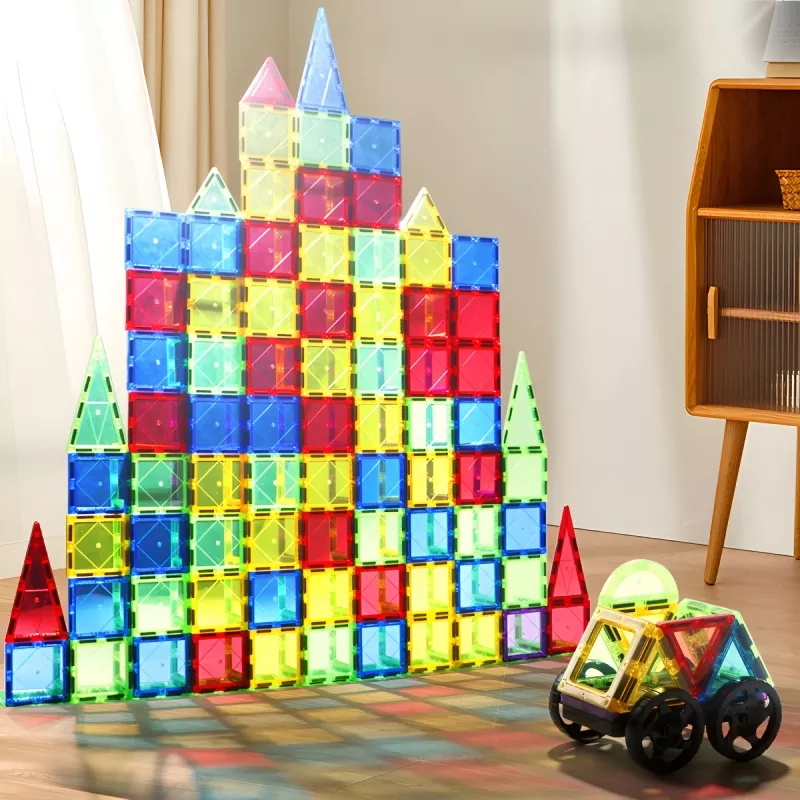
Magnetic blocks are not only entertaining but also serve as potent tools for enhancing various aspects of child development. These construction toys engage children in hands-on play, fostering creativity as they explore different shapes, colors, and structures. Through play, children learn to manipulate objects, which boosts their spatial awareness, an essential skill that supports later academic success in areas like mathematics and the sciences.
Moreover, attractive blocks are effective in promoting problem-solving skills. As youths experiment with building different configurations, they encounter challenges that require perseverance. This activity encourages them to assess their structures, re-evaluate their approaches, and seek solutions, all of which are fundamental components of cognitive development. Each attempt to create something new builds resilience, teaching children that failure is often a stepping stone to success.
In addition to cognitive benefits, attractive blocks significantly contribute to social development. When children play together, they learn to communicate, share ideas, and collaborate on projects. This cooperative play nurtures social skills, including empathy and teamwork, as they negotiate roles and responsibilities in their building endeavors. The interaction around attractive blocks creates opportunities for meaningful connections, enabling kids to develop friendships and enhance their emotional intelligence.
Selecting and Organizing Magnetic Blocks
Regarding picking the appropriate magnetic blocks for your child, consider the age range of the child. For younger children, sets that feature larger pieces are recommended as they are more manageable to handle and pose less of a choking hazard. As children develop and improve their fine motor skills, you can introduce more complex sets with miniature pieces that allow for detailed designs and structures. Look for Go here made from non-toxic materials to guarantee safety during play.
Organizing magnetic blocks properly is crucial for maintaining a tidy play area and motivating children to clean up after themselves. Use clear storage containers or boxes with labels to sort blocks by magnitude, hue, or shape. https://rentry.co/zyuf64sw helps maintain the blocks accessible but also teaches children the importance of organization. Including open shelving can offer a visual display of the blocks, sparking creativity and enabling kids to see what they have on hand for building.
Finally, contemplate designing a designated play space for magnetic block activities. Visit the website can be a mat where children can play without restriction and create without the distraction of other toys. Having a focused area for magnetic blocks also communicates to kids that this is a purposeful playtime, fostering deeper engagement with the blocks. Periodically rotating the available sets can keep their interest alive and spark new ideas for creations.