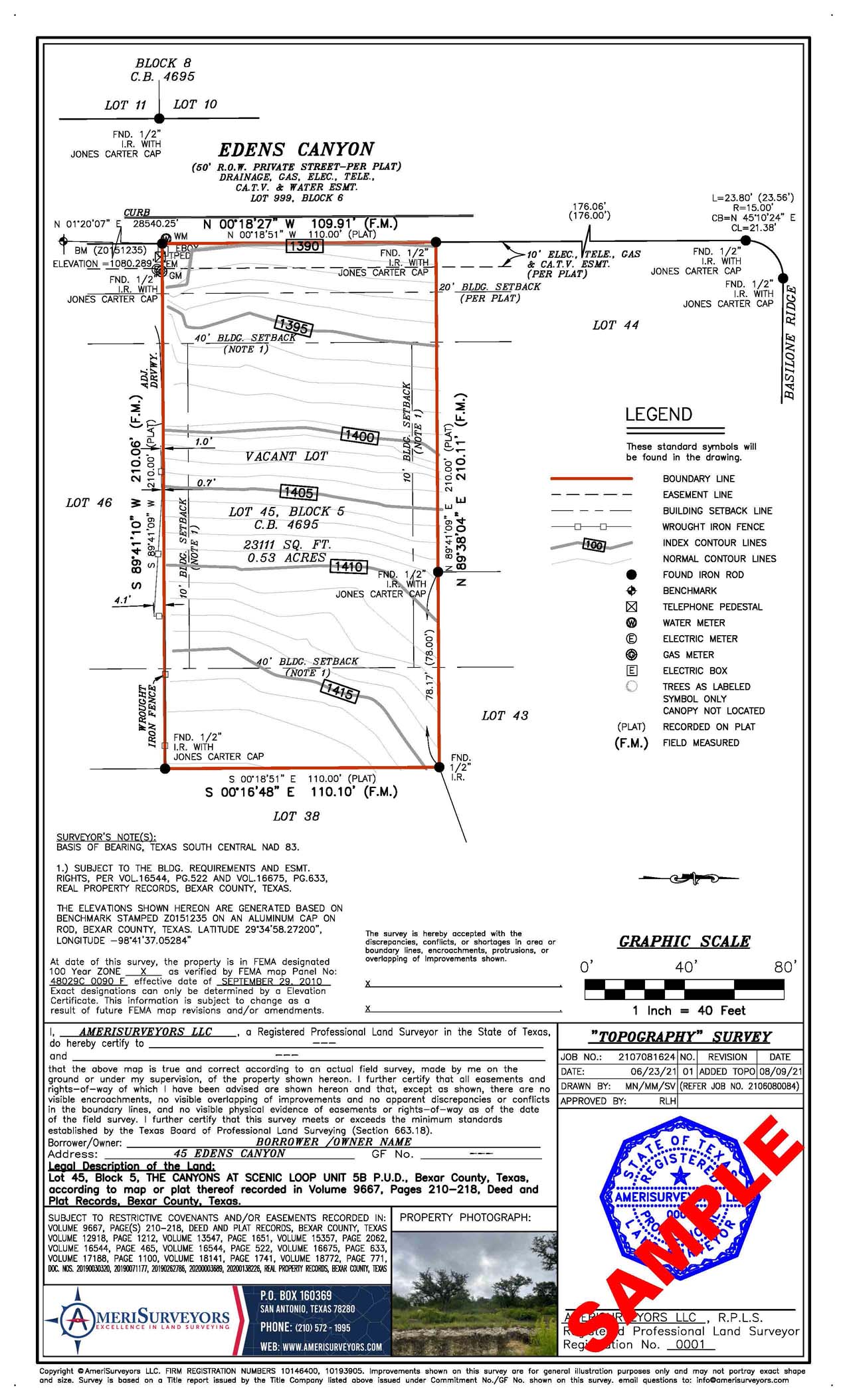
Terrain Surveys: The Pillar of Successful Land Planning


When begin upon any land construction initiative, understanding the topography of the land is crucial. Terrain maps serve as the foundation for efficient designing, design, and building, offering critical details about the natural features and contours of a site. These surveys not only map out the natural and man-made components of a landscape, including flora, elevations, structures, and water bodies, but they also enable decision-making by predicting potential issues and prospects for growth.
In an era where precision and effectiveness are paramount, terrain maps are more important than ever. They assist not only housing and commercial developers but also engineers and planners decide how most effectively to tackle a job. By highlighting Website link of a site, these maps play a crucial role in successful building projects. Comprehending what a terrain survey encompasses and its importance can greatly improve the planning process, making sure that any project is well-informed and carefully positioned with the surrounding context.
Comprehending Topographical Surveys
Topographical surveillance represent detailed representations of the native and artificial features of a land area, showcasing the height, outlines, and configuration of the terrain. Such assessments offer key information regarding land characteristics such as slopes, drainage patterns, plant life, and facilities. They are crucial for a wide array of land development endeavors, as they create a foundation for comprehending how the land can be optimally used.
The value of topographical surveys lies in their ability to influence architectural processes. By correctly surveying the topographical elements of a location, contractors, designers, and professionals can make educated decisions about the siting of facilities, utilities, and environmental features. https://kanstrup-newton-2.blogbright.net/understanding-ground-truthing-the-impact-of-topographical-surveys-in-project-planning is essential for ensuring that endeavors are not only viable but also environmentally friendly and in accordance with local regulations.
In furthermore to guiding land improvement, topographic assessments play a key role in risk assessment and management. Understanding the landform of a site can uncover potential challenges such as flood risk, land degradation, and transportation challenges. By recognizing these issues early in the development process, interested parties can develop plans to overcome them, leading to more effective projects.
The Importance of Topographical Surveys in Project Development
Terrain surveys play a vital role in land development by providing vital data about the land's features, elevations, and contours. This information is important for architects, engineers, and developers as they plan and design new projects. A detailed topographic survey ensures that potential challenges are recognized early, minimizing risks associated with unforeseen site conditions. Without this basic understanding, projects may encounter major delays and increased costs due to inadequate planning.
In addition, topographical surveys are essential in ensuring compliance with local regulations and zoning laws. Many planning applications require accurate topographic data to assess the consequences of proposed developments on the environment and surrounding areas. By enabling knowledgeable decision-making, these surveys help secure necessary permits and approvals, accelerating the project timeline and contributing to overall project success. Additionally, topographical surveys can assist in flood risk assessments, drainage design, and environmental impact evaluations, reinforcing their importance in sustainable development practices.
The use of modern technology, such as UAVs and laser scanning, has considerably enhanced the accuracy and efficiency of topographical surveys. These advancements enable surveyors to gather detailed information quickly, reducing the time required for site assessments and increasing productivity. By harnessing such technologies, developers can gain a clearer understanding of their site and make better decisions, ultimately leading to a more streamlined development process and superior project outcomes.
Selecting the Best Topographical Survey Method
Selecting the right method for conducting a topographical survey is vital for achieving accuracy and efficiency. Multiple techniques, such as conventional land surveying, aerial surveys using drones, and modern laser scanning, all possess their own advantages and suitable applications. Traditional land surveying is often in-depth and accurate, making it best for compact sites or projects requiring meticulous measurements. On the other hand, drone surveys can encompass larger areas quickly and obtain high-resolution images, making them a preferred choice for expansive commercial developments or infrastructure projects.
One more important consideration is the specific needs of your project. For example, if your site has rough terrains, laser scanning may be the best method, as it can exactly capture complex topographic features without the need for significant physical access. Moreover, incorporating GPS technology can enhance the accuracy of the survey, notably in remote locations. Understanding the terrain and the project's requirements will guide the selection of an adequate technology while considering cost considerations and data needs.
Finally, collaborating with experienced surveyors can help streamline the decision-making process. Professionals in the field can provide guidance into which method would be best based on project scope, site conditions, and budget constraints. They can also advise on compliance with local standards and standards. At last, choosing the right topographical survey method not only support the accuracy of the data collected but also affects the overall success of the land development project.